
Masterless Distributed SCADA
DX — Distributed eXtension
DX removes the web server from the SCADA data path and the master from the SCADA architecture. What's left is a system with no single point of failure, and an operator display with no round-trip latency.
Real time data directly to your screen
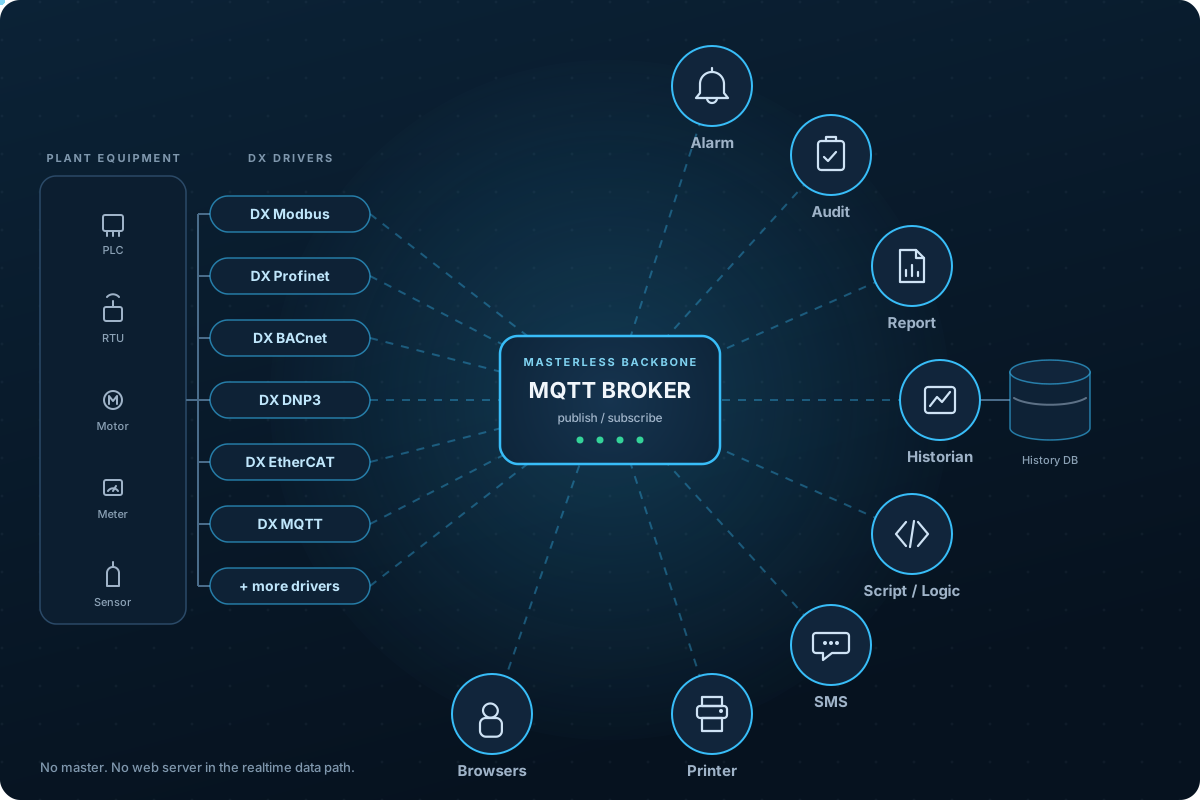
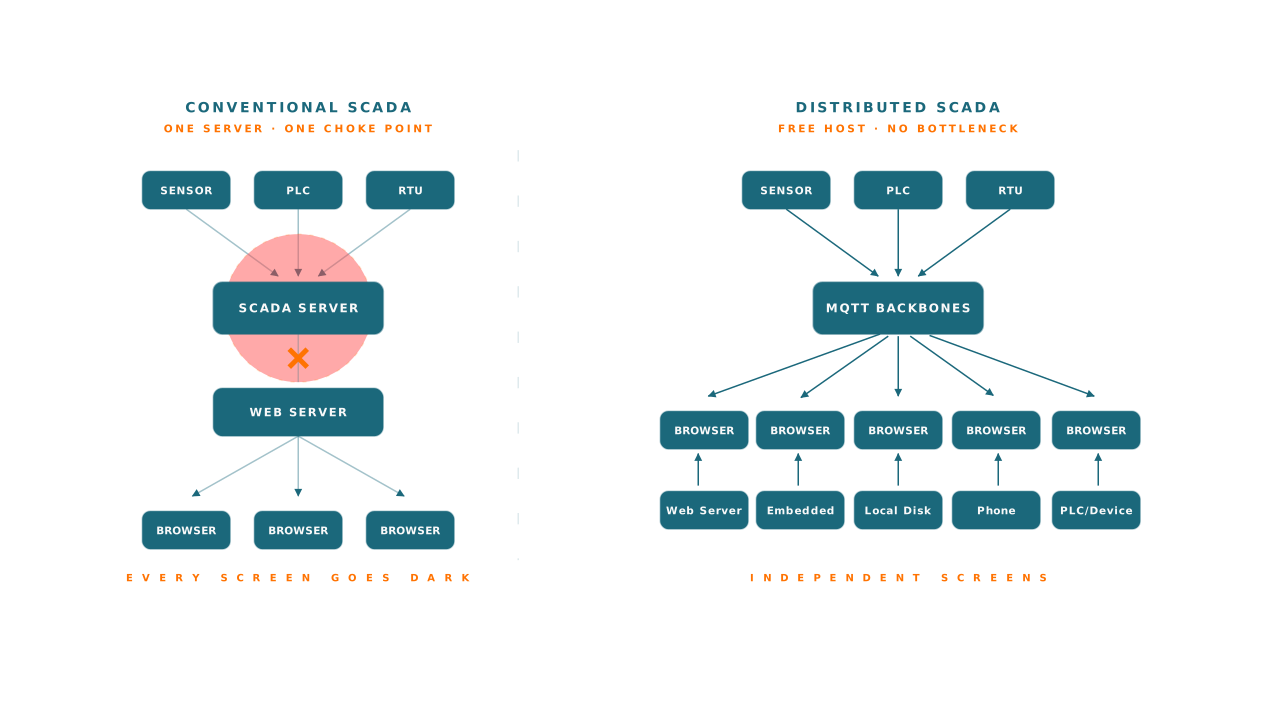
Distributed architecture collapses the chain. Modules publish and subscribe as peers on the MQTT backbone — no module is the master — and the browser is one more peer on that same backbone, not a client of a web application server.
All IO drivers, SCADA modules, browser thin client are at the same level, having identical interface and configuration. You just need to configure once for one node and extend the same concept to all other peers. In another word, you may add in the SCADA components seamlessly into any existing MQTT network.
Distributed and loosely coupled
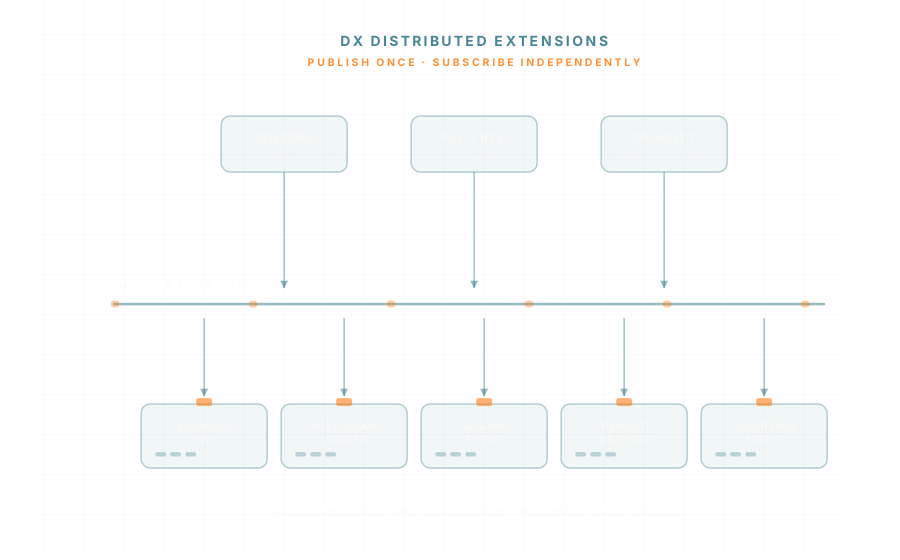
The DX system is versatile to integrate into any architecture. If you have a smaller scale of plant and put a distributed extentions into one machine, and serve the content through a web server, the realtime traffic will not load through the web server and the benefits are still a lot more reliable than monolithic system.
All distributed extensions work like a plugin to the MQTT network. For instance, if your device/system already communicate in MQTT, then you can immediately have the HMI display. If the payload is not readily in the simple Key-Time-Value (KTV) pairs, you just need to plug in DX-MQTT to restructure the JSON format using standard JSON-Path syntax. If you need to display the historian trending, just plug in DX-Historian Logger. You may freely grow your system wherever and whenever needed.
When one instance of DX hit the hardware limit regardless of CPU/MEM, you just need to run another instance on another device or machine, even on different OS. If the requirement calls for redundancy, you just need to duplicate the configurations for 2 instances to perform loadsharding when both instances are running. If you need another MQTT backbone, just configure all extensions to pub/sub to two or more MQTT servers.
Every distributed extensions are completely modular and loosely coupled and work within their own group with its own data flow. For instance, when sensors are feeding in data into MQTT network, real-time data will be shown on the browser. Then Historian Logger will save the real-time data into the database, hence trending can be displayed. Report extension could archieve accordingly. Alarm extension could picks up real-time data and send out alerts to Historian Logger. This means sensor datas are published once to the MQTT network, and the rest of the extensions like mimic display in browser, historian, scripting logic, alarm & report, and any first line modules will receive and process separately and independently.
Free hosting - No bottleneck
Conventional SCADA still funnels every tag through a central server: field devices publish to it, a web server mediates it, and every browser pulls through that same choke point. Take the master down - or just overload it - and every screen in the building goes dark at once, even though the plant is still running fine.
What that buys the plant
No single point of failure
Any module, broker node, or browser session can drop and be restarted independently. There is no master to lose and no master to fail over.
Browser-direct telemetry
The operator screen subscribes straight to the MQTT backbone. No application server sits in between to add a hop, a queue, or a version to keep in sync.
Fail-safe is visible, not silent
Stale or fail-safe values carry a sentinel timestamp the browser renders differently from live data — even when the numeric value happens to match. Operators never mistake "last known" for "known now."
Overrides that expire themselves
An operator override carries its own expiry timestamp. When the clock passes it, precedence lapses automatically — no cancel message to send, and nothing to forget to send.
Grows by addition, not redesign
New sites, new modules, or additional broker capacity attach to the same fabric. Nothing is re-architected to add a node.
Precedence without synchronised clocks
Live, fail-safe, and override values resolve their precedence from the message itself — not from trusting every node's clock to agree.
DX SCADA
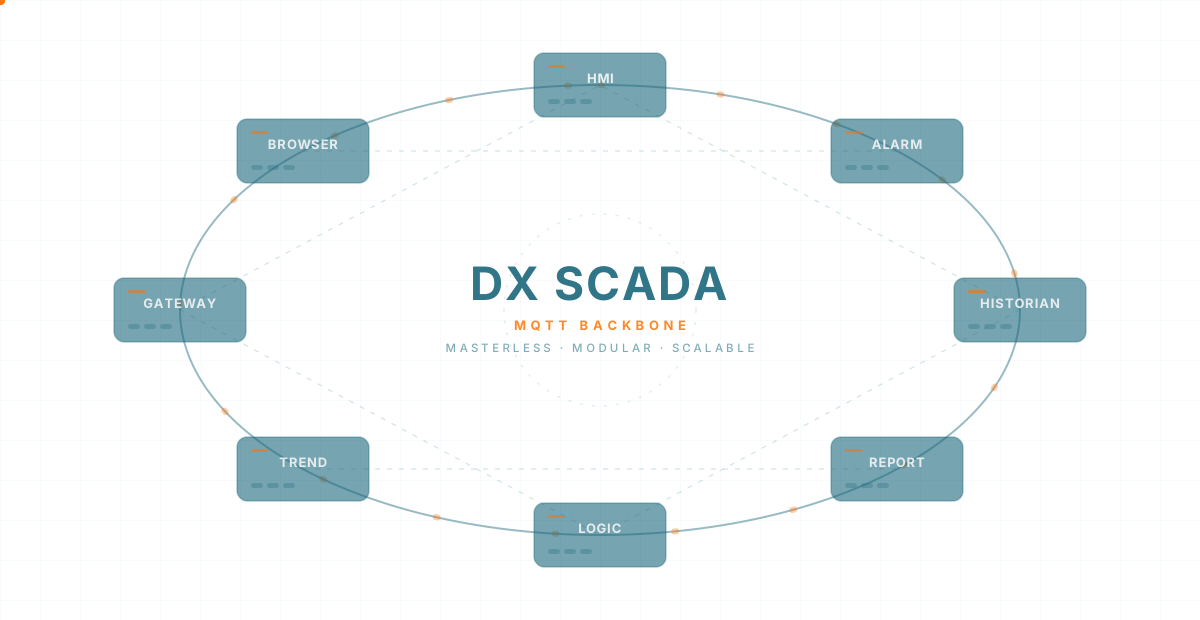
The Distributed eXtension SCADA is masterless and completely built on the MQTT backbone, built to scale. As long as you have MQTT data input, you can add any SCADA/HMI components directly into your MQTT network without changing your existing architecture or topology. If you already have MQTT data, you can have the HMI instantly, with direct browser connections.
The DX modules are completely modular — add any function as required. All modules are independent of each other, so shutting one down for maintenance will not affect the others. The cross-platform modules support both Windows and Linux and can be installed on a single machine or distributed across separate machines or devices. Every module is equipped with store-and-forward capability for handling network disruption.
The masterless architecture ensures no single point of failure and allows all modules to scale without a bottleneck. The browser page can be loaded locally and fetch and send data to the relevant modules directly, without going through a web server. No web server is needed for serving realtime data, and no SQL database is fetched over HTTP.
DX Drivers
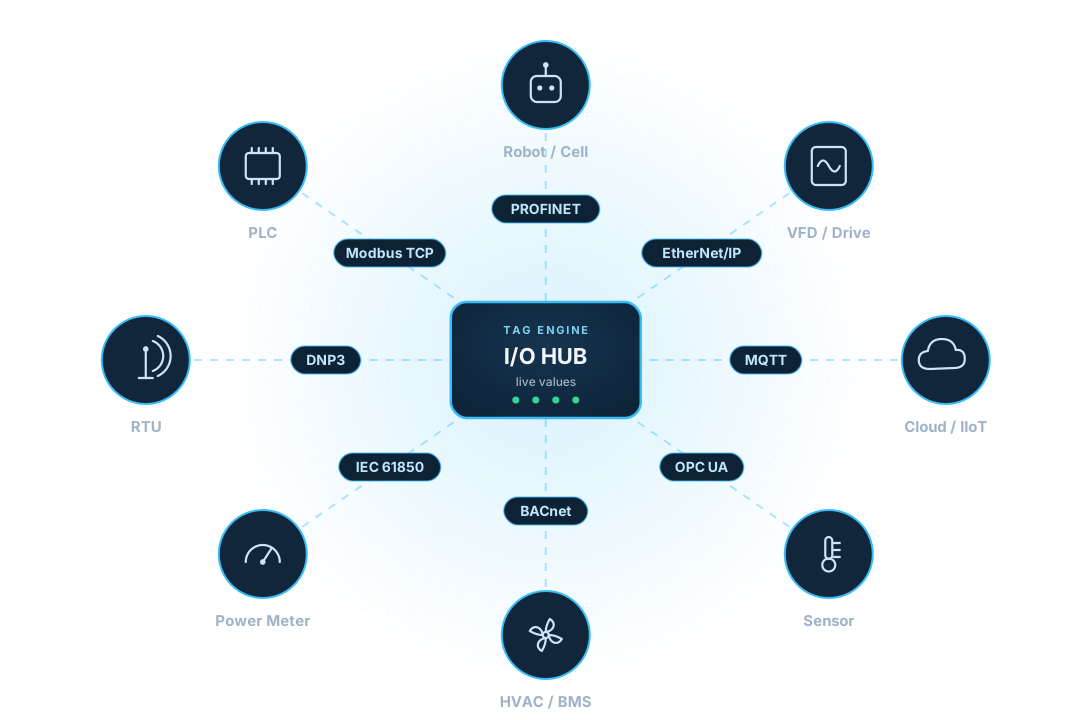
DX Drivers are IO interfaces for the industrial range of communication protocols in the IoT era. They are all built entirely on MQTT, which means IO signals from any communication protocol are published to the MQTT backbone. Simply put, it's a Mqtt2Any driver.
Because the MQTT payload is open and interchangeable across all DX drivers, putting any two DX drivers together makes them a protocol converter. DX Profinet plus DX Modbus becomes a Profinet-to-Modbus gateway. BACnet, DNP3, and EtherCAT together become BACnet-to-DNP3, BACnet-to-EtherCAT, and DNP3-to-EtherCAT converters.
Further, you may develop your own drivers based on the open and simple KTV payload. The DX driver is versatile: run it alongside the server or another host, run it separately on site as an edge device, or drop it into an embedded system as an IO gateway.
DX Modules
Independent, cross-platform, and individually deployable — add only the functions your plant needs.
DX Manager
The manager that simplify modules starting/stopping control. Cross-platform on Windows and Linux, installable on a single machine or distributed across devices.
DX Driver
Mqtt2Any IO interface for industrial communication protocols. Publishes IO signals to the MQTT backbone as open, interchangeable payloads. The final outcome is a powerful of ANY2ANY gateway system.
DX MQTT
The MQTT-native driver, bringing existing MQTT data onto the DX backbone using standard compliant JSONPath syntax. So you don't have to change the existing payload structure and still can get the full benefits of the Distributed eXtensions.
DX Historian / Trending
Historical data and trending for the DX backbone. It's the prime storage system for other DB dependent modules like alarm, audit, report.
DX Alarm
Alarm handling for the DX backbone. Independent, cross-platform, and deployable standalone or distributed.
DX Audit
Audit logging for the DX backbone. Independent, cross-platform, and deployable standalone or distributed.
DX Watch
Watchdog monitoring for the DX backbone. Independent, cross-platform, and deployable standalone or distributed.
DX SQL
SQL database connectivity for the DX backbone. Independent, cross-platform, and deployable standalone or distributed.
DX License
License management for the DX modules. Independent, cross-platform, and deployable standalone or distributed.
Where it fits
Anywhere a plant needs distributed, resilient monitoring and control with a real-time browser HMI — and cannot afford a single control-room server standing between "running" and "blind."
Water & Wastewater
Oil & Gas Remote Sites
Multi-Site Manufacturing
Utilities & Energy Distribution
Building & Facility Automation
At a glance
Masterless · modular
Browser ↔ broker, direct
Windows & Linux, single or distributed
See DX in your architecture
Ask for a walkthrough of the DX architecture and a live demo of fail-safe and override rendering.